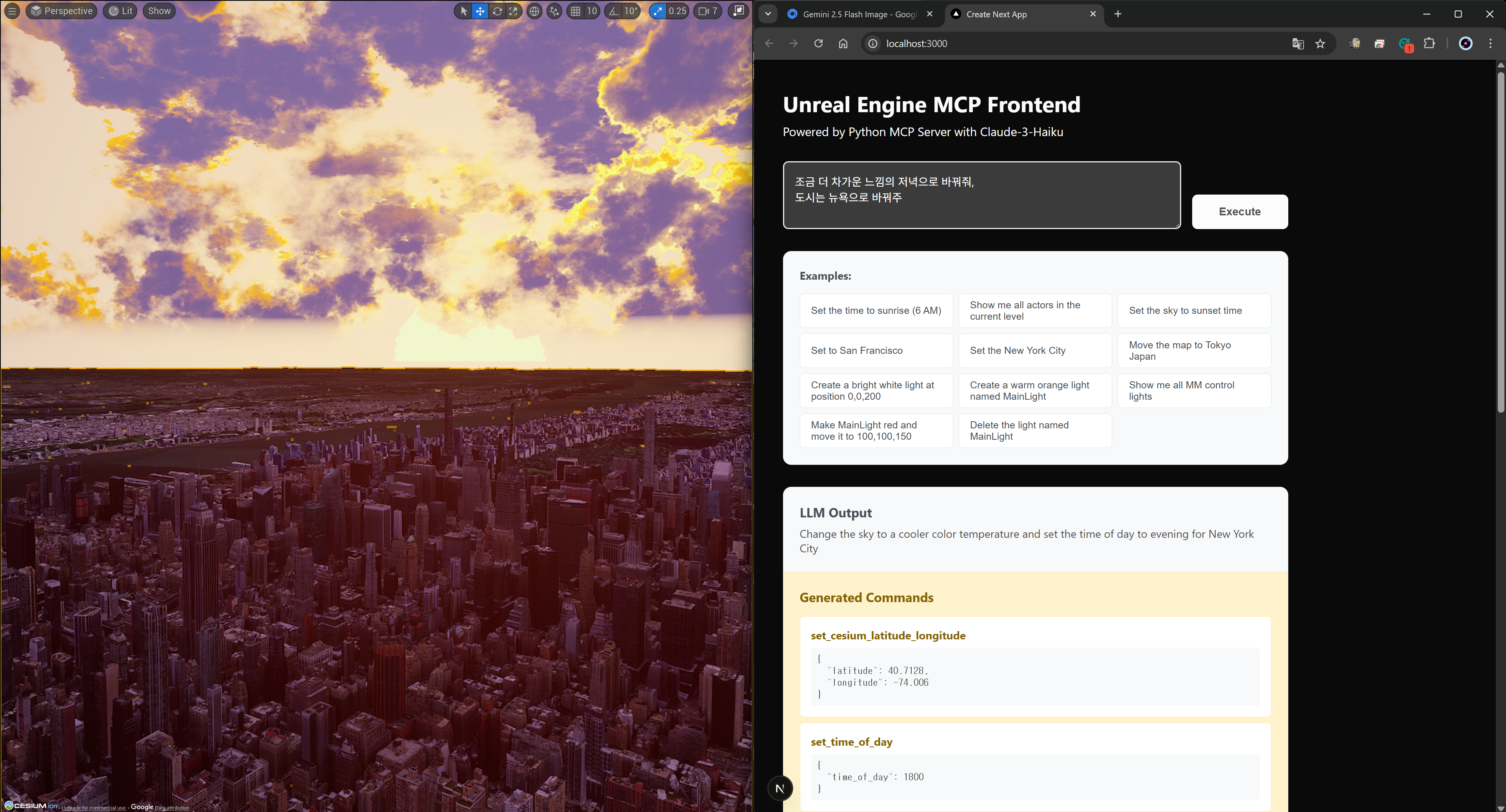
Live UE Scene Bridge
Natural-language scene control, generative service integration, and processing feedback
Internal R&D PoC · Demo stage · C++ · FastAPI · Next.js
Problem
Cinev Studio had character and camera workflows, but controls for lighting, asset placement, weather, and time of day were still limited. I built a PoC for controlling these through natural language and passing the scene into image and video generation services.
Solution
I connected natural-language scene control and external generative services using the plugin’s existing Python–C++ JSON bridge. Cesium sets the location and UDS controls time and weather; an Unreal viewport capture then feeds into image and video generation. My focus was defining processing states across C++, Python, and TypeScript and communicating progress to users.
Usage Examples
"Show me downtown Tokyo"
"Go to San Francisco"
"Set the time to 6 PM"
"Give me warm tones"
"Set up a cold noon scene"
3-Layer Architecture
Web UI / CLI → HTTP:34115 → FastAPI + NLP (Claude/Gemini)
                                    ↓
              ┌──────────────┬──────────────┬──────────────┐
              │ UE C++ Plugin│ Nano Banana  │ Veo-3        │
              │ TCP:55557    │ Image Gen    │ Video Gen    │
              └──────────────┴──────────────┴──────────────┘
① Web UI (Next.js) / CLI — frontend where users input natural language
② FastAPI — converts natural language to JSON commands. Users choose Claude or Gemini based on their own API key
③ UE C++ Plugin — receives JSON commands via TCP socket and executes in editor. Nano Banana transforms UE HighResShot via i2i, Veo-3 generates video directly from the result
Core — Cesium + UDS Integration
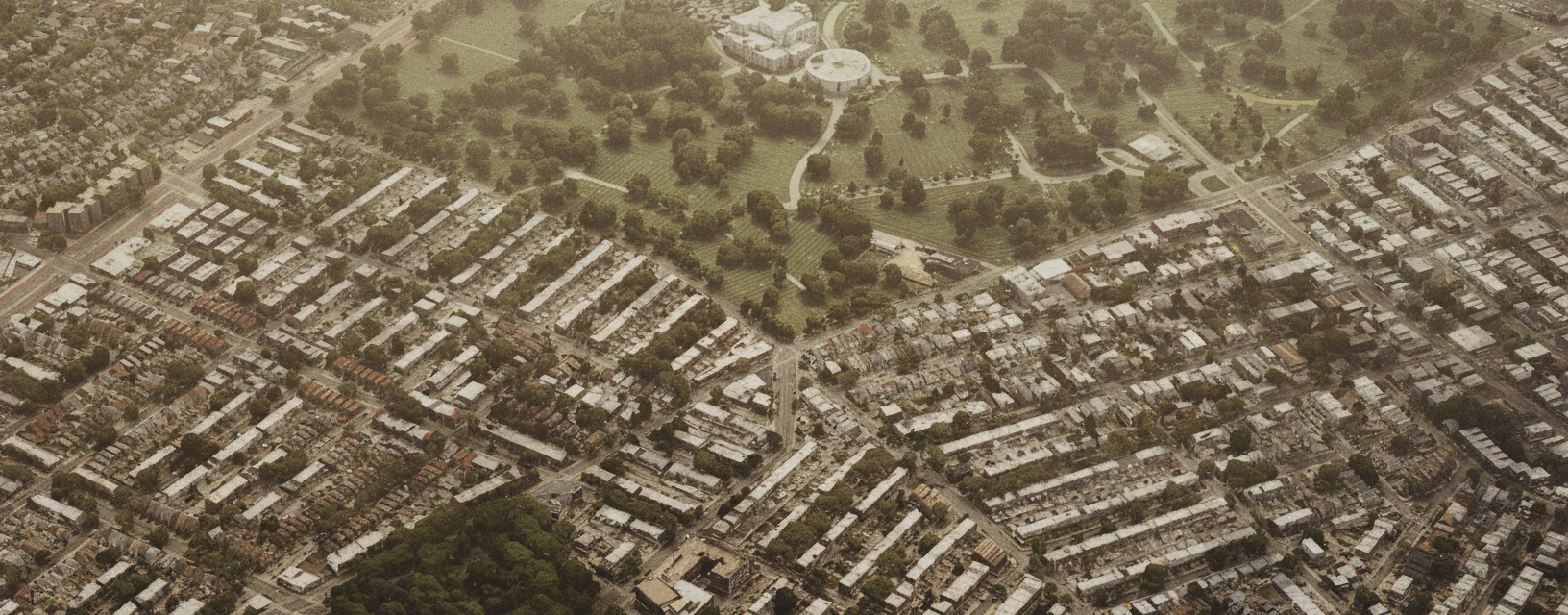
Cesium and Ultra Dynamic Sky set the location, time, weather, and mood; Nano Banana turns the scene into a concept image. I focused on defining the status passed between services and showing users which step was currently running.
Style transformation result — "Give me a post-apocalyptic mood"
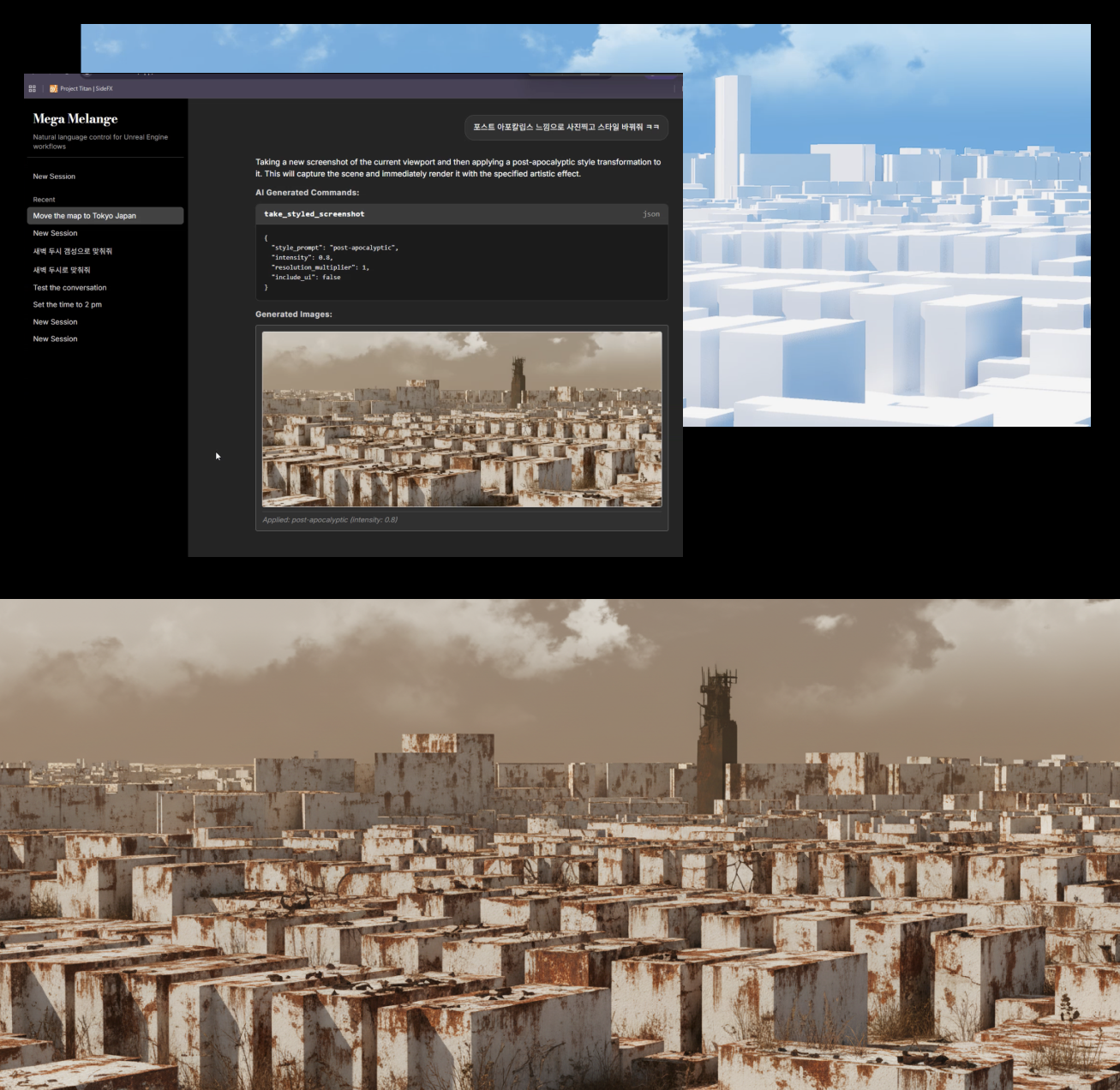
i2i pipeline in Web UI
Roblox Integration — Business Demo
I imported FBX assets through the Roblox API into UE, placed characters on generated backgrounds, and produced images and videos with Nano Banana and Veo-3. This internal demo showed the CEO and planning team how the workflow could be used.
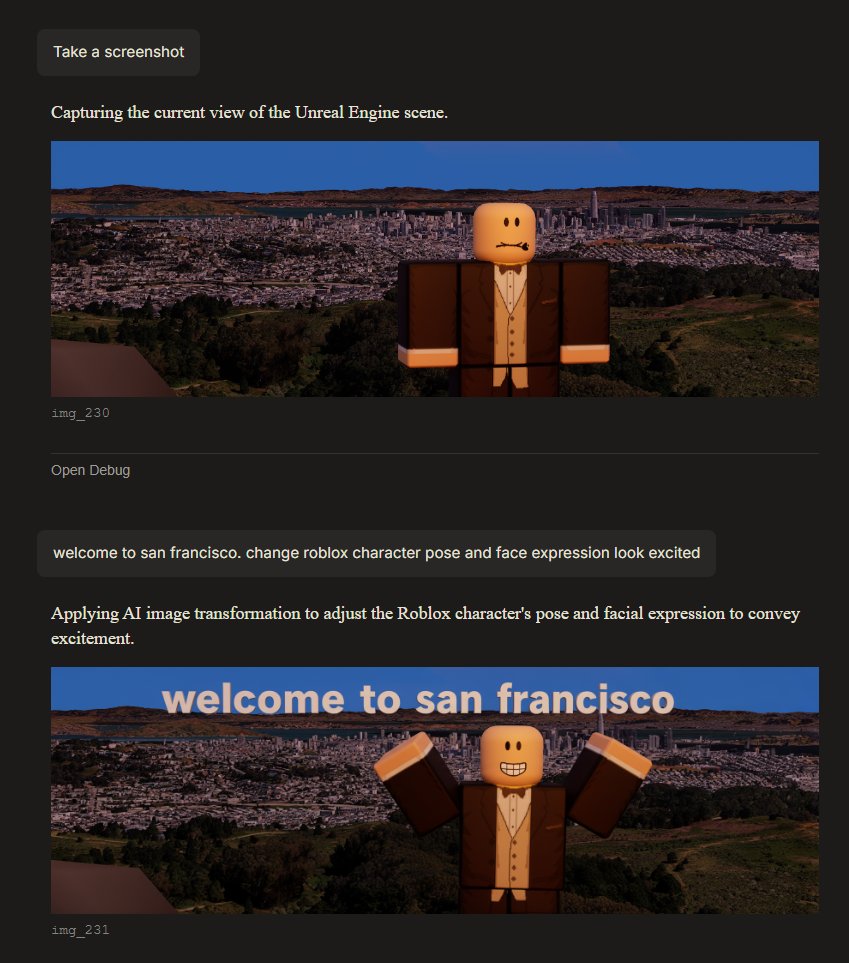
Roblox character placed on generated background
Processing Status Feedback
A request to give the current Unreal scene the atmosphere of another era passes through capture, transfer, generation, and waiting for a response. I defined status information across C++, Python, and the TypeScript UI so users could understand what they were waiting for.
| Stage | Workflow |
|---|---|
| Capture | C++ captures the Unreal viewport |
| Transfer | Pass the capture to Python |
| Generate / Wait | Submit to the image generation API and wait |
| Result | Present the generated result in the UI |
Refining LLM Inputs and Calls
After the workflow was in place, I refined LLM inputs and call structure. I centralized LLM processing in Python to reduce duplicate calls and simplified parameter-validation instructions, decision branches, examples, and injected context. For image transformation, I compared prompt length with clarity while considering instructions needed to preserve composition and control transformation strength.
For CJK asset-name translation, I also applied batching, deduplication of shared names, and concise input/output formatting.
Deciding what to adopt next
Lighting and asset-placement controls were planned as follow-up features to fill gaps in the product. Character–environment interaction was also a later task. In a separate snow and puddle interaction experiment, results varied between runs; I deferred adoption because consistent behavior could not be secured within the remaining schedule.
Result
| Category | Result |
|---|---|
| Outdoor Scene Setup | One-step composition of location + time + weather + mood via natural language |
| i2i Pipeline | Scene to concept/mood transformation via Nano Banana |
| Service Integration | 4 services (UE, Nano Banana, Veo-3, Roblox) |
| Audience | Demo for CEO, planners, team leads — POC |
| Outcome | Completed internal demos for the CEO, planners, and team leads. Follow-up development was deferred due to business priorities; the work remained a PoC without production use. |
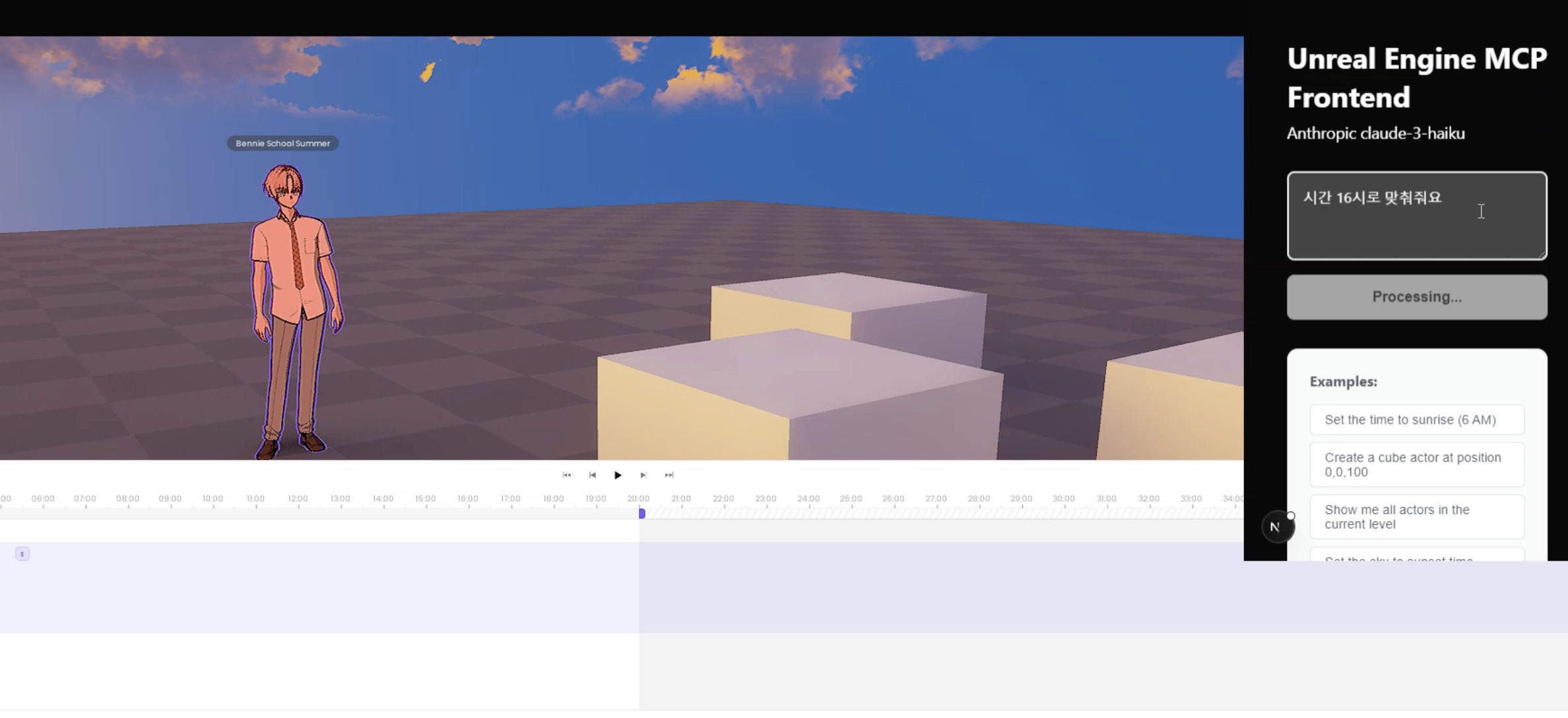
Early prototype — real-time UE viewport control via natural language input